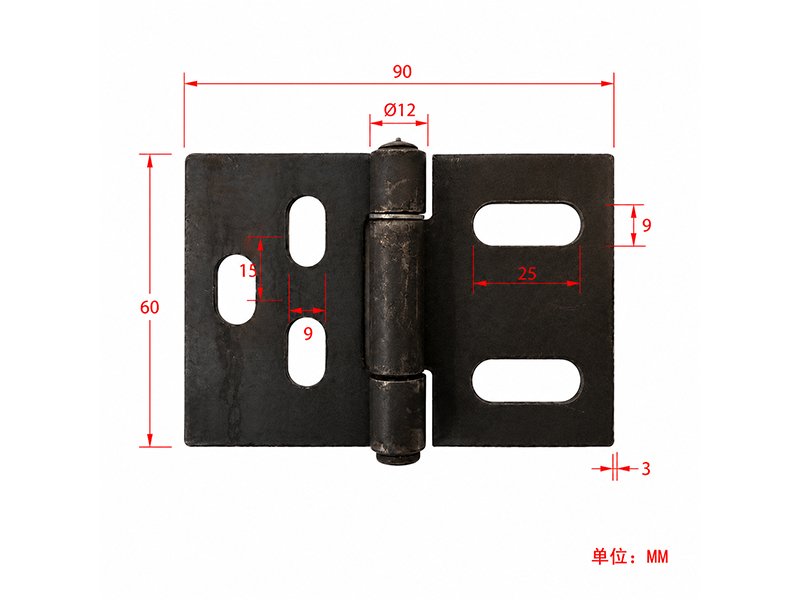
How does hinge work?Your gate sags. Your door squeaks. Your cabinet won’t shut properly. Almost every time, one small part is to blame: the hinge.
A hinge works by joining two flat metal plates with a pin through the middle. When a door swings open, the pin spins inside the round barrel joint, and the door rotates while the plates hold it to the frame. The whole setup carries the door’s weight and passes it safely into the wall or post.
Keep reading to learn how each part does its job, why where you put the hinge matters, and how to pick the right one before problems start.
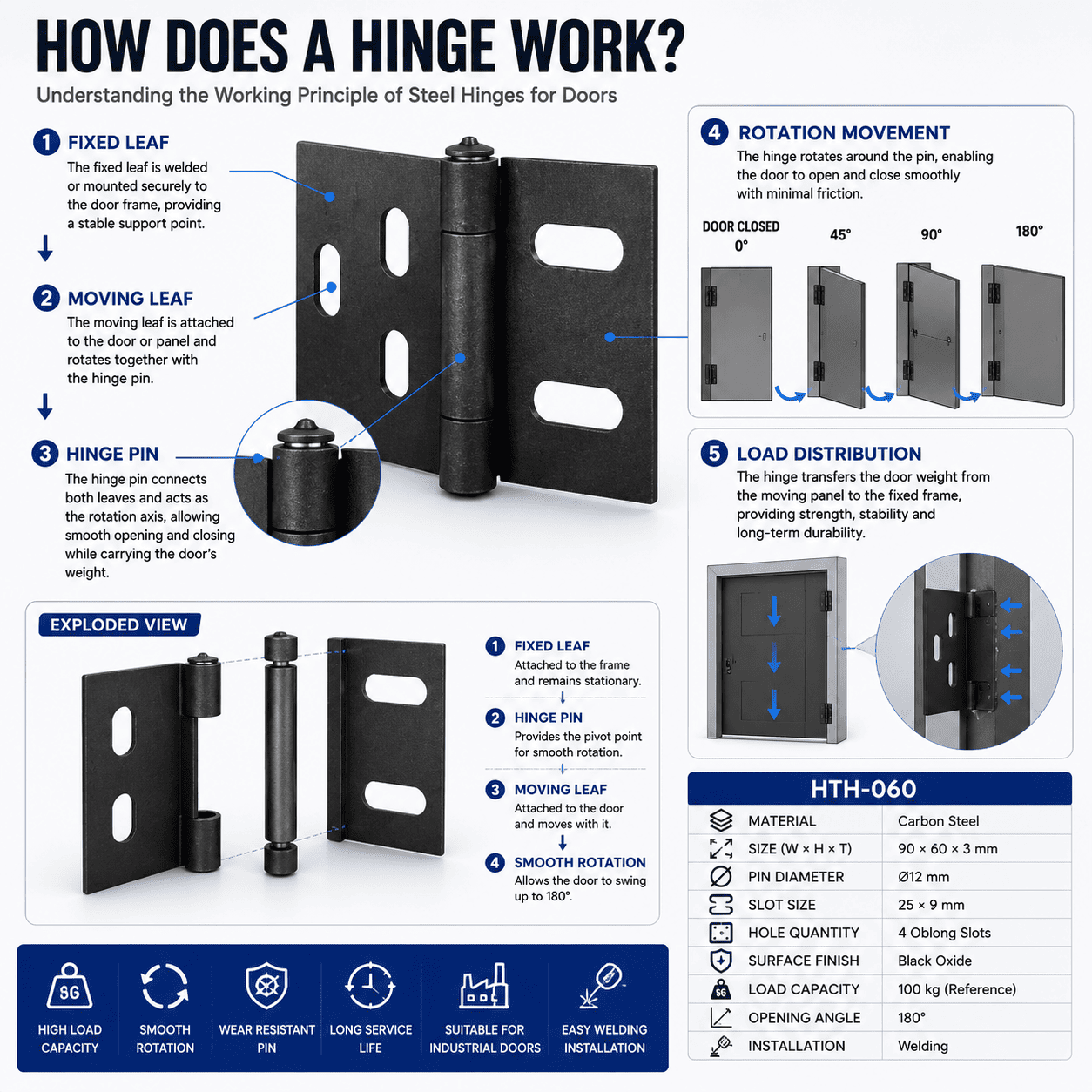
What Are the Basic Parts of a Hinge?
Most people look at a door hinge and just see a little metal plate. But there are actually three key parts inside, and each one does something different.
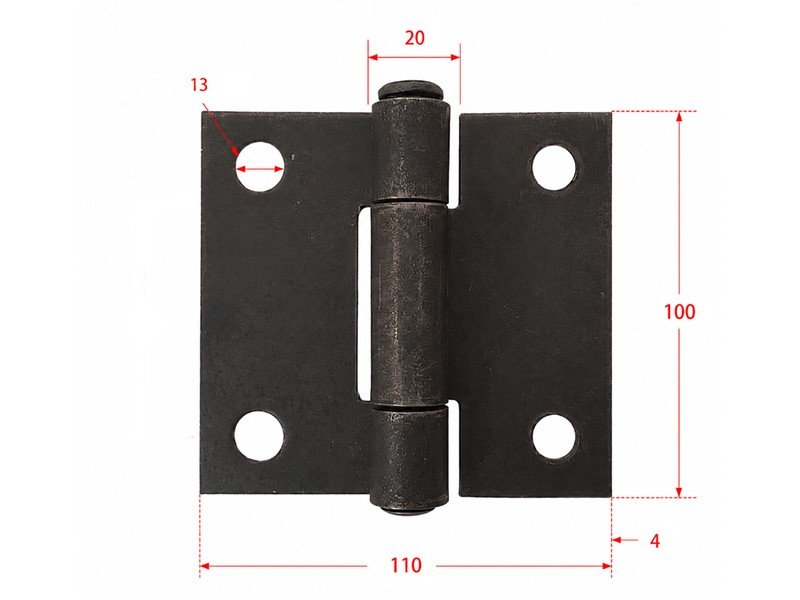
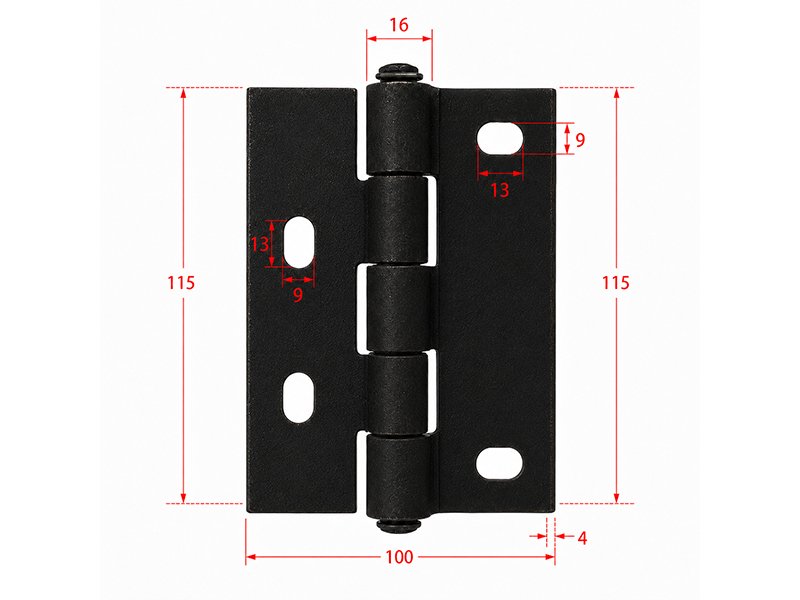
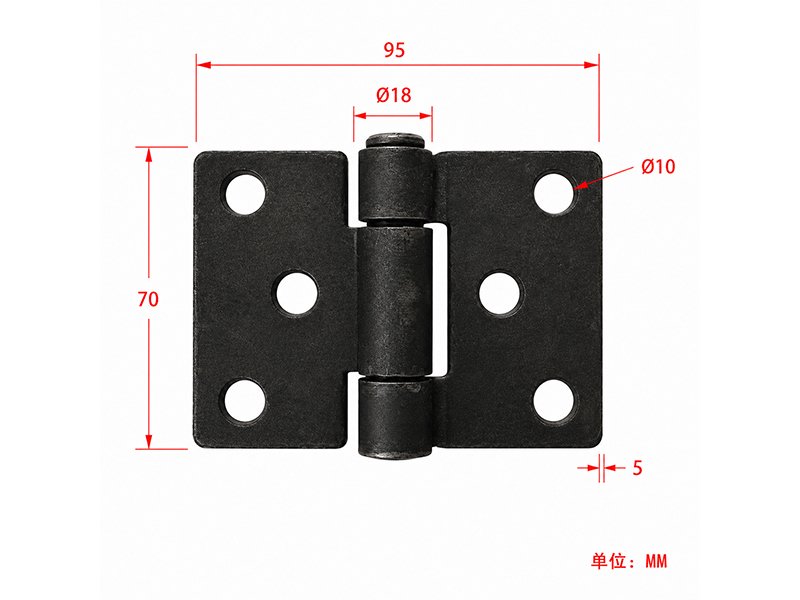
A hinge has three parts: two leaves (the flat metal plates that attach to the door and the frame), a knuckle (the round barrel in the middle where the two leaves meet), and a pin (the rod that slides through the barrel and lets the door rotate).
Think of the knuckle like a short tube that’s been cut in half — one half on each leaf. When the two halves line up, the pin slides through both of them and locks them together, like threading a bolt through two rings. The leaves are what carry the weight, spreading the load across the screws or welds that hold them to the door and frame. Get the size and metal grade of these three parts wrong, and a hinge that looks perfectly fine can fail within months. Get them right, and the same hinge can last decades without a single problem.
How Does a Door Hinge Work?
Every time you push a door open, something very simple is happening — but it’s easy to miss if you’ve never thought about it before.
When you open a door, the leaf on the door side rotates around the leaf that’s fixed to the frame. The pin in the middle stays still while the door swings around it — the same way an axle stays still while a wheel spins around it.
A bicycle wheel is a great way to picture this. The axle in the center never moves, but the wheel spins around it smoothly. A hinge door works exactly the same way. The frame-side leaf is locked in place with screws or welds, and the door-side leaf rotates around the shared pin. On a heavy steel gate or industrial door, the pin has to handle not just the weight of the door but also the pulling and twisting force every time the door swings — which is why bigger and heavier doors need thicker pins, larger knuckles, and stronger leaves, not just bigger screws.
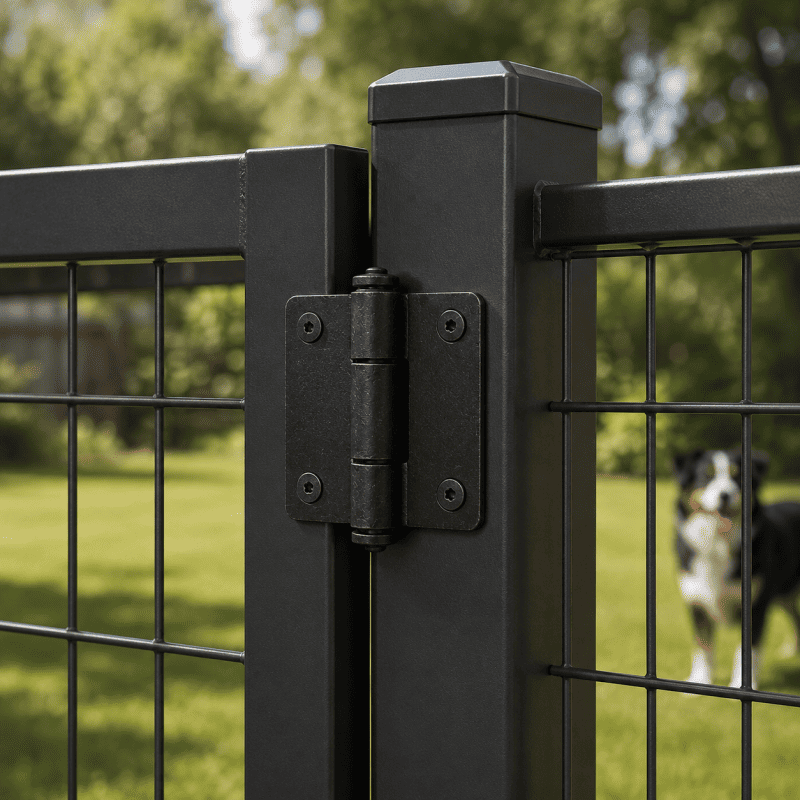
How Does a Hinge Support the Weight of a Door?
A door doesn’t float in place on its own. Gravity is constantly trying to pull it down, and the hinge is the only thing stopping it from dropping.
The door’s weight travels from the door panel into the hinge leaves, then through the screws or welds into the door frame or post. The more hinges a door has, the more that weight gets shared around — which is why heavy doors always need more hinges than light ones.
Imagine carrying a heavy box. Using one hand is hard. Using two hands is much easier because the weight is split. Add a third person, and it’s easier still. Hinges work exactly the same way. A light interior door might be fine with two steel hinges for doors, but a heavy factory gate or truck body door usually needs three, four, or more. The top of door hinge always takes the biggest share of the load because gravity pulls down on the open end of the door, creating a lever effect — like holding a long pole at one end. This is why the top hinge is often bigger or thicker than the bottom hinge on heavy industrial doors.
Do Hinges Work Both Ways?
Most hinges only let a door swing one way. But some are built to let a door push open in either direction — and knowing the difference saves a lot of headaches.
A standard hinge is one-way: the door swings open one direction and the frame stops it from going the other way. A double-action hinge lets the door push open both ways, like the swinging doors you see in busy restaurant kitchens or hospital hallways.
Double-action spring hinges are the most common way to get two-way swinging. They use two spring coils — one pulling each way — so no matter which direction you push the door, it springs back to the center on its own. These are popular in factories and commercial kitchens where workers often push through with both hands full and can’t stop to turn a handle. Single-action hinges, on the other hand, have a built-in stop so the door can’t swing past the frame — which is important for doors that need to seal tightly or stay in one position.
How Do Universal Hinges Work?
Have you ever ordered a hinge and discovered it only fits one side of the door? That’s a frustrating — and expensive — mistake. Universal hinges exist to prevent exactly that.
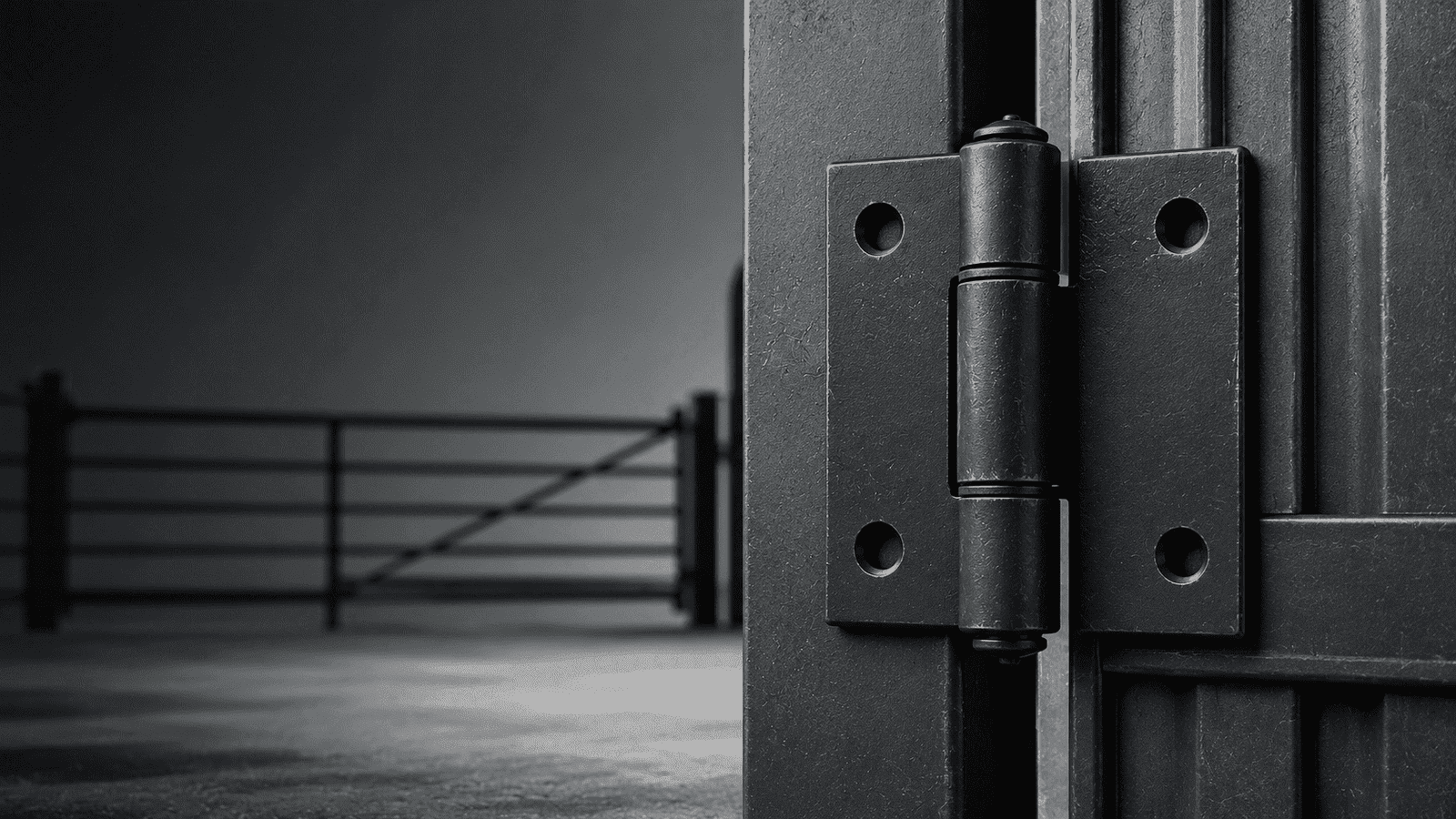
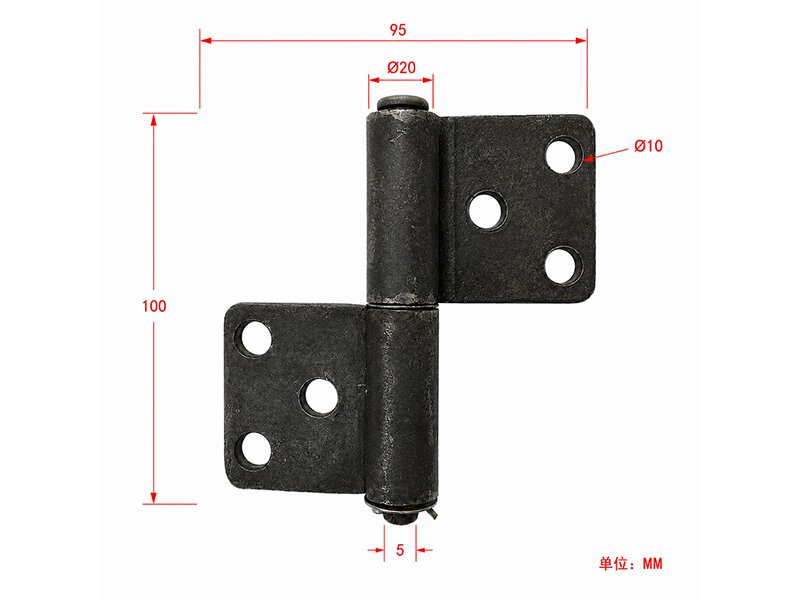
A universal hinge fits both left-hand and right-hand doors without needing a separate version for each side. The leaf shape and screw hole pattern are the same on both sides, so you can flip or rotate the hinge to match whichever direction the door swings.
For anyone buying hinges in large amounts, this is a big deal. Imagine ordering 500 hinges for a factory fit-out and then realizing half the doors swing the opposite way. With a non-universal hinge, that means two separate orders, two separate part numbers, and twice the chance of getting the wrong batch shipped. A universal design solves all of that at once. When you buy door hinge hardware in bulk for OEM projects or mixed installations, always ask your door hinge supplier whether the part is direction-specific or universal — it’s a small question that can prevent a very large headache.
What Are the Four Types of Hinges?
“What are the four types of hinges?” is one of the most-searched hinge questions online — and the most useful answer focuses on the four types that actually cover the majority of real-world buying decisions.
The four main types are: butt hinges (the everyday standard hinge on most doors), continuous hinges (one long hinge running the full length of a door), spring hinges (self-closing, snaps the door shut on its own), and weld-on hinges (welded directly to steel frames for maximum strength on heavy industrial doors).
These four cover almost every common application. Butt hinges handle most interior and light commercial doors. Continuous hinges stop long panels from drooping in the middle. Spring hinges take care of the “door left open” problem without any extra equipment. And weld-on hinges are the right choice any time the load is too heavy for screws to handle reliably. The table below shows how each type fits into real-world use.
| Hinge Type | How It Works | Best Used For | Load Level |
|---|---|---|---|
| Butt hinge | Two leaves + pin, screwed to door and frame | Interior doors, light commercial doors | Light–medium |
| Continuous / piano hinge | One long hinge running the full door edge | Truck body doors, equipment panels, tool lids | Medium–heavy |
| Spring hinge | Built-in spring pulls the door back to closed | Fire doors, hospital corridors, kitchen pass-throughs | Light–medium |
| Weld-on hinge | Welded directly to steel frame — no screws | Industrial gates, farm gates, trailer doors | Heavy–very heavy |
How Does a Ball Bearing Hinge Work Differently?
A basic hinge has a plain metal pin spinning inside the knuckle — metal rubbing on metal every time the door moves. A ball bearing hinge adds tiny steel balls around that pin, and that one small change makes a surprisingly big difference.
In a ball bearing hinge, a ring of small steel balls sits between the pin and the walls of the knuckle. Instead of metal sliding against metal, the balls roll. This cuts down on friction, reduces squeaking, and makes the hinge last much longer on busy doors.
A good way to picture this: dragging a heavy box across the floor is hard because of friction. Put the box on wheels, and it rolls easily. Ball bearings do the same thing inside a hinge. A plain pin hinge is fine for a door that opens a few times a day. But on a factory gate or a truck body door that opens and closes dozens of times every day, that constant rubbing adds up fast. The pin wears thin, the knuckle gets sloppy, and the door starts to wobble and make noise. Ball bearing stainless steel door hinges solve this by switching from sliding contact to rolling contact — the same principle used in car wheels. For high-use applications, the small extra cost compared to standard steel door hinges is almost always worth it.
How Does a Spring Hinge Work?
A spring hinge looks almost identical to a regular door hinge from the outside. But the moment you let go of the door, you notice the difference — it swings shut on its own.
Inside a spring hinge, a coiled spring wraps around the pin. Every time you push the door open, you’re winding that spring tighter. The second you let go, the spring unwinds and pulls the door back to closed.
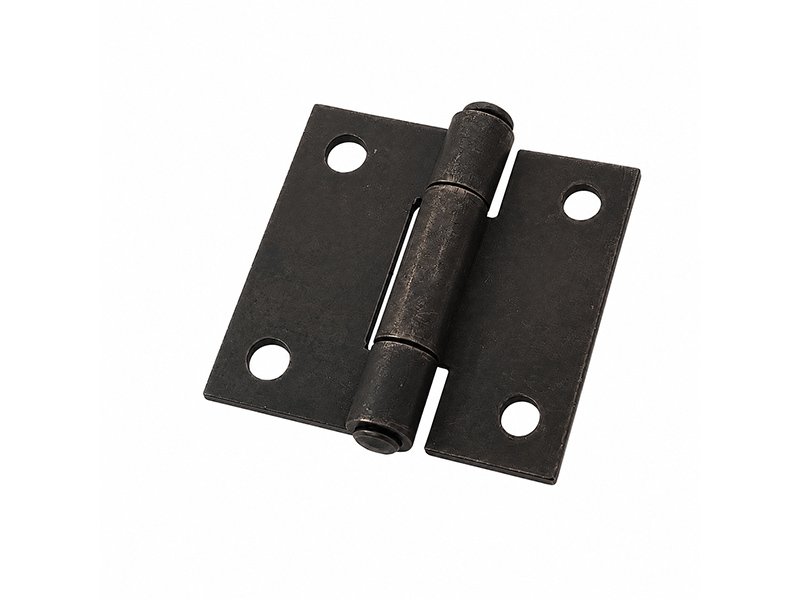
Most spring hinges let you adjust how hard the spring pulls — you insert a small hex key into a slot on the knuckle and turn it to increase or reduce the closing force. This is more useful than it sounds. A fire door in a commercial building needs strong tension to close fast and latch firmly every time. A hospital corridor door needs gentler tension so it doesn’t slam on patients or staff. A light cabinet door might need almost no tension at all. Spring hinges are also one of the cheapest and easiest ways to make a door comply with fire safety rules that require self-closing doors, without installing a separate and much more expensive overhead door closer.
How Does a Weld-On Hinge Work?
Most hinges grip a door with screws. A weld-on hinge uses heat instead — it’s fused directly to the metal frame, creating a bond that’s often stronger than the steel itself.
A weld-on hinge is melted directly onto a steel gate, frame, or door panel using a welding torch. Because there are no screw holes to strip, no bolts to loosen, and no wood to crack, weld-on hinges can take loads that would rip a screw-mounted hinge clean off the frame.
Picture gluing two pieces of metal together versus welding them. Glue can fail under enough stress. A weld becomes part of the metal itself. That’s why weld-on steel hinges for doors are the standard choice on heavy farm gates, industrial security doors, container doors, and trailer bodies — anywhere the door is very heavy, the opening cycles are very frequent, or the environment is rough enough to loosen screws over time. The trade-off is that installing and replacing a weld-on hinge requires welding equipment and a person who knows how to use it, which isn’t always available on a job site. But for raw strength, nothing beats it.
How Does Hinge Material Affect How Well It Works?
The metal a hinge is made from isn’t just about strength. It decides how long the hinge stays in good condition, how much rust it can survive, and how much attention it needs over the years.
The main choices are carbon steel (strong and affordable, but rusts without a coating), stainless steel hinges (rust-resistant and low-maintenance, ideal for wet or outdoor use), and galvanized steel (carbon steel with a zinc layer for basic outdoor protection).
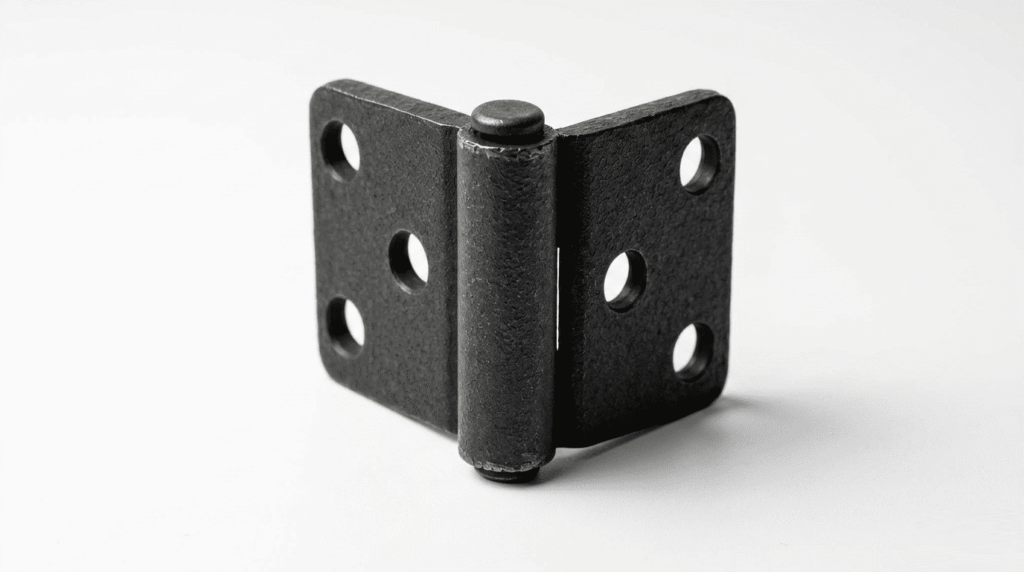
The right material always depends on where the hinge will live. Steel door hinges in a dry indoor factory are fine in plain carbon steel. Door hinges outdoor in a rainy climate or near the ocean need stainless steel door hinges — ideally 316 grade, which handles salt and chemicals better than 304. Small stainless steel hinges work well on lighter panels like electrical cabinet doors and control enclosures. Stainless steel door hinges 4 inch size is one of the most popular everyday choices for mid-weight industrial doors because it balances rust resistance, strength, and cost. For decorative entrance doors, a gold hinge or golden hinge finish gives a polished look while keeping a strong steel core underneath. On factory floors, an orange door hinge — sometimes listed in catalogs as door hinge orange — is a smart safety choice because the bright color makes moving parts easy to spot at a glance. The table below lays out how materials compare across the things that matter most.
| Material | Rust Resistance | Strength | Best Used For | Cost vs. Plain Steel |
|---|---|---|---|---|
| Plain carbon steel | Low | High | Indoor, dry environments | Lowest |
| Galvanized steel | Medium | High | Outdoor gates, farm equipment | Low–medium |
| Stainless steel 304 | High | High | Damp areas, food/chemical plants | Medium–high |
| Stainless steel 316 | Very high | High | Marine and heavy chemical exposure | High |
| Powder-coated steel | Medium | High | Industrial use, color-coded safety | Low–medium |
| Gold / golden finish | Medium | Medium | Decorative interior and entrance doors | Medium |
| Orange safety coat | Medium | High | Machine guards, visibility-critical panels | Low–medium |
How Do You Know If a Hinge Is Strong Enough for Your Door?
Buying a hinge that looks right but can’t actually handle the weight is one of the most common — and most avoidable — mistakes in any hinge project.
To check if a hinge is strong enough, find the total weight of your door and divide it by the number of hinges you plan to use. Each hinge should be rated to handle at least that much weight — and adding a 20–30% safety buffer on top is always a good idea.
Here’s a simple example: a 600-pound industrial gate with three hinges means each hinge has to carry 200 pounds. But if you choose hinges rated for 250–300 pounds each, you’ve got a comfortable buffer for wind load, vibration, and the extra stress that comes from daily swinging. Also check the material against your environment — a hinge rated for 400 pounds but made from plain carbon steel won’t last long mounted outside in the rain, no matter how strong it is. When you buy hinge hardware for a large project, always ask your hinge supplier for the load rating, material grade, and test data in writing, not just a number on a catalog page. A good china door hinge manufacturer will have this data ready without being asked.
What Are the Common Problems With Door Hinges?
Even a well-made hinge can run into trouble over time — especially if it was undersized, installed in the wrong place, or made from a material that doesn’t suit where it’s being used.
The five most common door hinge problems are: sagging (hinge too small for the door weight), squeaking (pin running dry or starting to rust), loose screws (holes worn out from too much load), rust (wrong material for the environment), and misalignment (hinge bent or fitted crooked).
Each problem points to a specific cause. Sagging almost always means the top hinge is undersized — a very common mistake when buyers pick hinges by size alone without checking the load rating. Squeaking means the pin needs oil or replacement; stainless steel hinges resist this much better than plain carbon steel in damp places. Loose screws are usually a sign that the door needed a weld-on hinge instead of a screw-mounted one, or that the frame material wasn’t solid enough to hold the load. Rust is a material mismatch — door hinges outdoor exposed to rain or salt air need galvanized or stainless steel, no exceptions. And misalignment is usually an installation issue, though it can also happen when a hinge is hit hard or overloaded repeatedly over a long period.
What Can Go Wrong If a Hinge Isn’t Working Properly — And How Do You Fix It?
A hinge that’s starting to fail doesn’t always make a lot of noise about it. Sometimes the first sign is just a door that feels a little off — slightly harder to push, slightly noisier than it used to be.
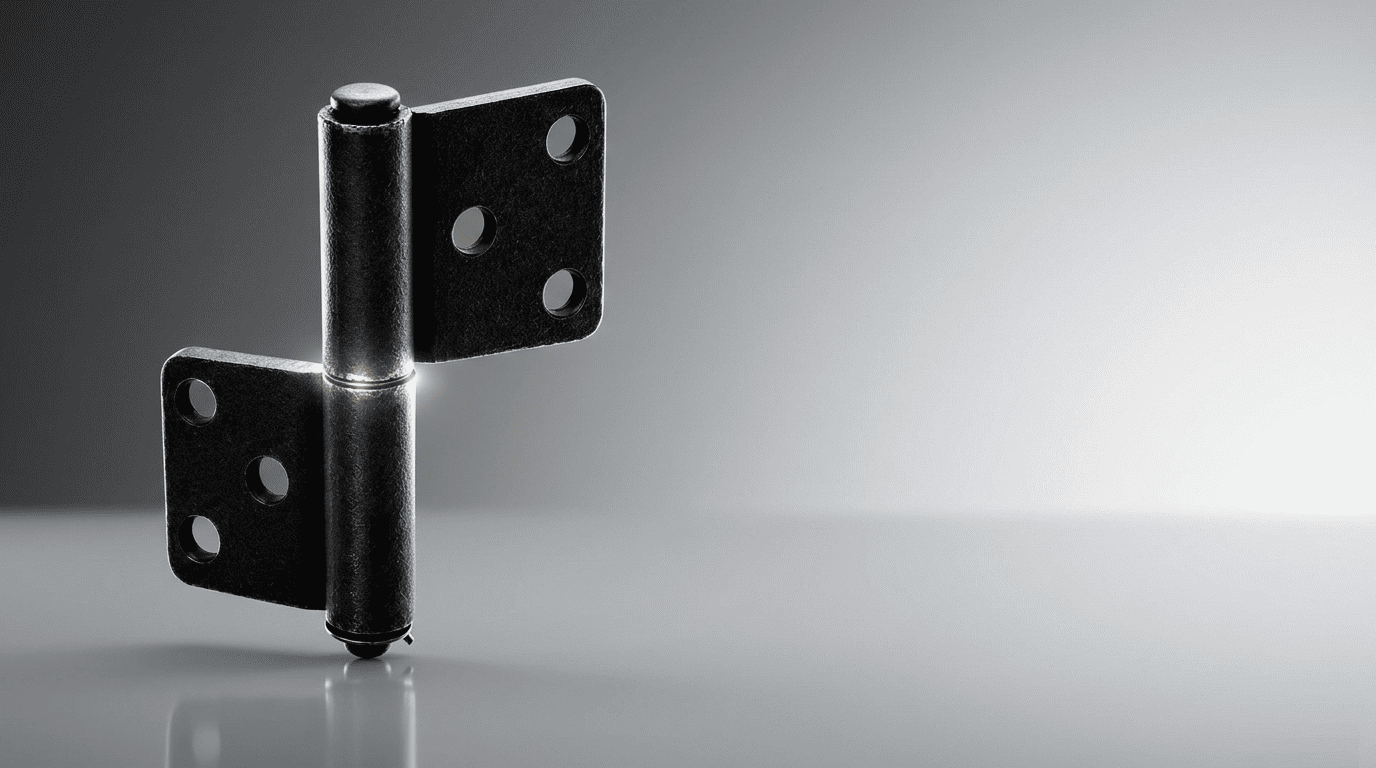
When a hinge starts failing, the fix depends on the cause: tighten or replace stripped screws, add lubricant to a squeaky pin, clean off rust and apply a protective coat, or replace the whole hinge if the leaf is bent or the knuckle is cracked.
For industrial doors and heavy gates, the smarter move is to catch problems before they grow. A quick check every six months — make sure all screws or welds are tight, the pin still moves smoothly, and there’s no visible rust or cracking on the leaves — can prevent a small issue from becoming an expensive repair. On doors that open and close constantly, ball bearing steel door hinges last significantly longer than plain pin hinges because rolling contact wears down much more slowly than sliding metal. If you do need to replace a hinge on a steel gate, it’s worth upgrading to a slightly higher load rating than the original — because if the first hinge failed early, that’s usually a sign it was undersized from the start. When you’re ready to buy door hinge replacements, request samples first and make sure the load rating, material, and finish match your original spec before committing to a full order.
Conclusion
A hinge does one job — but it has to do it right every single time. Pick the correct type, material, and load rating, and the door takes care of itself.
Provide your required lifting height, maximum load, site conditions, and target market — and expect a detailed, technically grounded response within one business day.
📖 Related Articles